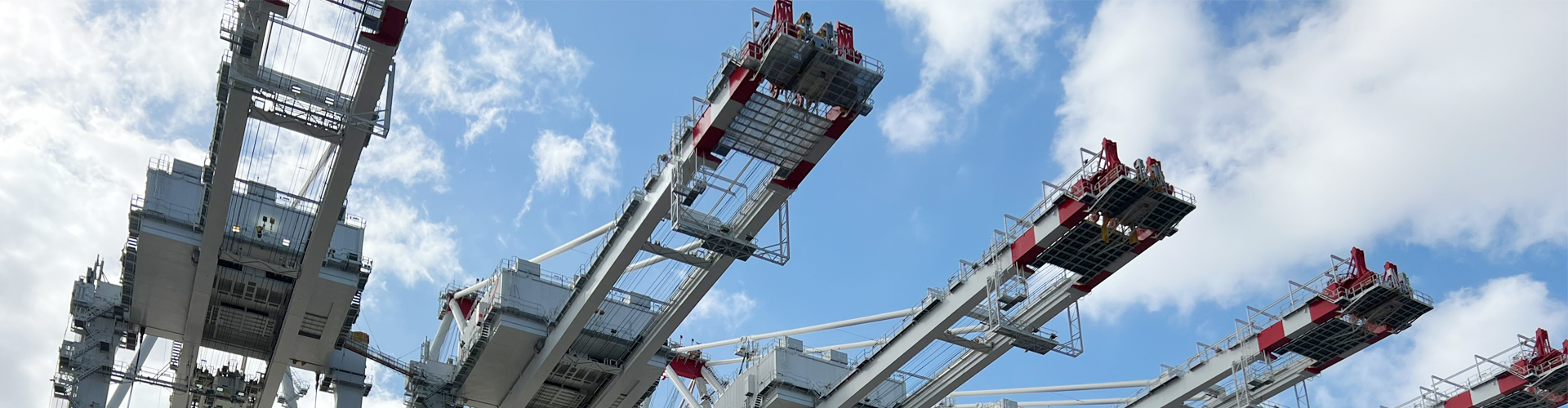
Port Machinery is the key technical support for modern ports in their loading and unloading transportation production, covering various types of equipment such as loading and unloading lifting equipment (such as ship loaders, ship unloaders, gantry cranes), continuous conveying equipment, and loading and unloading handling equipment, forming the core component of the port production quality assurance system. According to its function, it can be divided into three major categories. Relevant products and technical standards are clearly regulated by the "Port Standard System (2024)" and involve technical details such as safety regulations for gantry cranes, energy-saving operation requirements, and maintenance of anti-corrosion coatings. It constructs a multi-dimensional regulatory framework, and the evaluation of equipment energy consumption is implemented in accordance with the GB/T 36410 series of standards. The quality control of port equipment runs through the entire life cycle.
The technological evolution of port equipment can be divided into four stages: mechanization, informatization, automation, and intelligence [16]. The current equipment technology development focuses on intelligent upgrades. Technologies such as 5G networks, AI recognition, and high-precision positioning of Beidou have been applied to the remote control and automated operations of gantry cranes and quay cranes, etc. [4] [14]. According to the "Excavator Index", the port equipment utilization rate has increased continuously for six months since July 2025 [5]. As of 2025, the market size of automated equipment in Chinese ports has exceeded a critical point, with a compound annual growth rate of over 18%. The industry development trend is deeply in line with policies such as the "Outline for the Construction of a Transportation Strong Country", promoting the coordinated development of automated container terminal equipment and TOS systems, and evolving towards a green and international direction.